What Are The Benefits of Using an Electronic Patient Record in Healthcare?
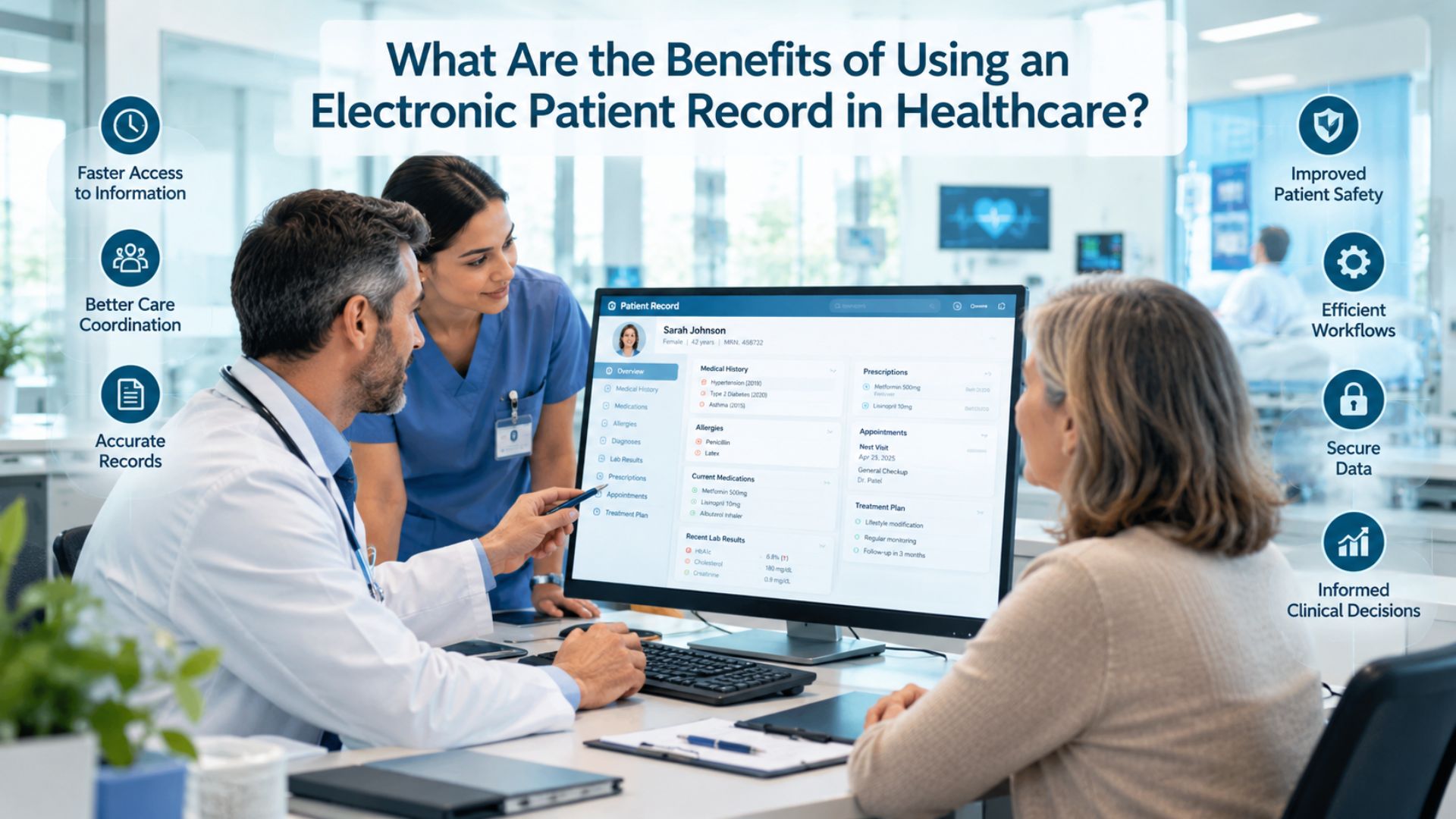
Healthcare organizations manage a large amount of patient information every day, including medical histories, diagnoses, medications, test results, treatment plans, and follow-up details. Managing this information accurately and making it available when needed is essential for safe and coordinated care. An electronic patient record helps healthcare providers organize patient information digitally, allowing authorized professionals to access relevant data more efficiently.
What Is an Electronic Patient Record?
An electronic patient record is a digital version of a patient’s health information that can be created, stored, updated, and accessed electronically by authorized healthcare professionals. Depending on the system, records may include medical history, diagnoses, medications, allergies, laboratory results, clinical notes, prescriptions, treatment plans, and other important information.Modern electronic health record systems can also connect information from different healthcare providers and care settings. This gives clinicians a more complete view of a patient’s medical history and supports better-informed decisions.
How Does an Electronic Patient Record Improve Patient Care?
One of the biggest benefits is faster access to relevant patient information. Instead of searching through paper files or requesting records from another department, authorized healthcare professionals can access digital information through the appropriate system.Having complete and accurate information available at the point of care can support clinical decision-making. Providers can review previous diagnoses, medications, allergies, test results, and treatment information before making care decisions. This can also help reduce information gaps that may contribute to avoidable errors.
What Should Healthcare Organizations Consider?
Implementing digital patient records requires more than simply replacing paper files. Healthcare organizations should consider usability, data security, interoperability, staff training, workflow integration, and appropriate access controls.Interoperability is particularly important because healthcare information may need to move between different systems and organizations. Systems that can securely communicate with other healthcare technologies can help create a more complete view of patient information and support coordinated care.
What Are the Key Benefits?
Better Access to Patient Information
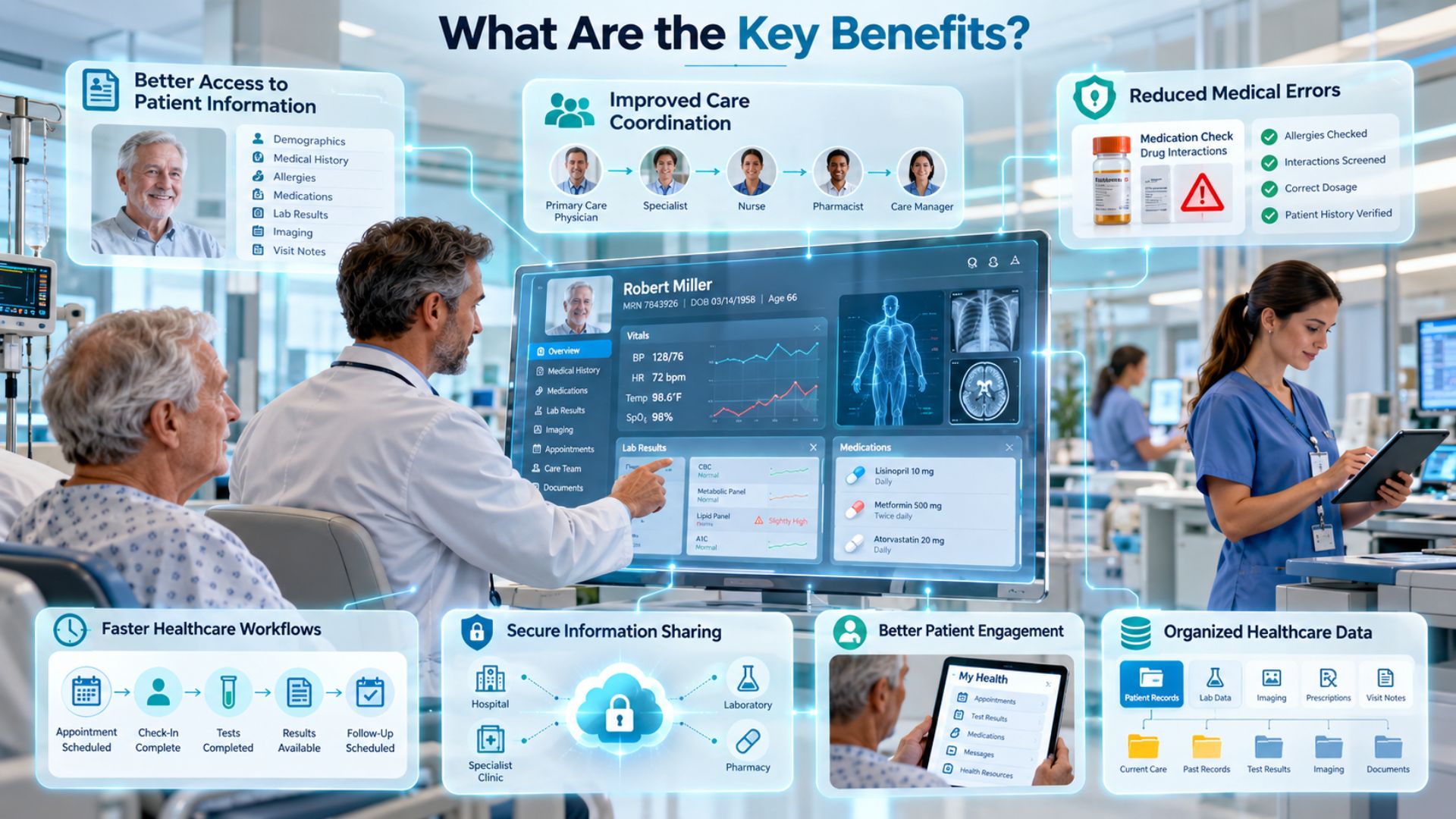
Digital records make important health information easier for authorized users to locate and review. Physicians, nurses, specialists, and other members of a care team can access relevant information when required, supporting faster and more informed care.
Improved Care Coordination
Patients may receive care from multiple physicians, specialists, laboratories, pharmacies, and healthcare facilities. Digital records can help connect information between authorized providers, reducing fragmented information and supporting smoother transitions between different care settings.
Reduced Risk of Medical Errors
Complete patient information can help healthcare professionals identify important details such as allergies, previous medications, diagnoses, and test results. Some systems can also provide clinical alerts and reminders that support safer prescribing and decision-making.
More Efficient Healthcare Workflows
Digital records can reduce manual paperwork and streamline tasks such as documentation, information retrieval, coding, scheduling, and prescription management. This allows healthcare staff to spend less time handling administrative processes and more time supporting patient care.
Easier Information Sharing
Healthcare often requires information to move between different providers and organizations. Interoperable systems can support secure electronic information exchange, helping authorized professionals access relevant patient information when it is needed.
Greater Patient Engagement
Digital health records can also support patient participation. Depending on the system, patients may use portals to review information, communicate with providers, access results, manage appointments, and better understand their treatment plans. Greater access to health information can help patients participate more actively in decisions about their care.
Better Data Organization and Reporting
Healthcare organizations generate substantial amounts of clinical and administrative data. Digital records organize this information in a structured format, making it easier to retrieve, analyze, and use for quality improvement, reporting, and care management.You can also watch: Everyone is working, but the system is not connected.
Summary
An electronic patient record can help healthcare organizations improve access to information, coordinate care, reduce administrative workload, support safer clinical decisions, and engage patients more effectively. When implemented with appropriate security, interoperability, and workflow integration, digital patient records can become an important part of efficient, connected, patient-centered healthcare.
FAQs
What is an electronic patient record?
It is a digital record containing a patient’s healthcare information, such as medical history, diagnoses, medications, allergies, test results, and treatment details.
How does it benefit healthcare providers?
It gives authorized providers faster access to organized patient information and can support clinical decision-making, care coordination, documentation, and workflow efficiency.
Can electronic patient records improve patient safety?
They can support patient safety by making important information more readily available and providing features such as clinical alerts, reminders, and medication-related checks.
Do electronic patient records help patients?
Yes. Depending on the system, patients may gain easier access to their health information, appointment details, test results, prescriptions, and communication tools through connected patient portals.
